Tile Transitions Guide for Oklahoma City Homes
If you've ever walked from a tiled kitchen into a carpeted living room and felt your toe catch on a sharp tile edge, you already understand why transitions matter. In Oklahoma City homes, these narrow strips where one flooring material meets another are some of the most overlooked — and most failure-prone — details in the entire installation. At Echo Tile and Stone, we've spent more than two decades solving transition problems across the metro, from 1950s ranch homes in Del City to new builds in Mustang and Blanchard. Done right, a transition is nearly invisible. Done wrong, it's a trip hazard, a cracked tile waiting to happen, and a constant reminder that something wasn't planned properly. This guide breaks down how tile transitions really work in Oklahoma City's climate, soil, and housing stock — and what to insist on before your next project begins.
Why Tile Transitions Matter More Than Most Homeowners Realize
A transition is not decorative trim. It is a structural buffer between two materials that expand, contract, and flex at completely different rates. Tile is rigid and dimensionally stable. Hardwood moves with humidity. Carpet compresses. Concrete slabs shift. When those forces meet without a properly engineered joint, the tile usually loses — and it loses at the edge, where the install is thinnest and least supported.
In Oklahoma City, this matters more than in most markets. Our expansive clay soils swell and shrink with every wet and dry cycle, and our freeze/thaw winters push slabs in ways that coastal or desert climates never see. A transition detail that works fine in Phoenix can telegraph cracks across a kitchen floor in Nichols Hills after two winters.
The Three Jobs Every Transition Must Do
- Cover the gap created by different material heights without creating a lip that catches feet or vacuum cleaners.
- Allow movement between the two surfaces so neither material is forced to crack, cup, or tent.
- Seal and protect the subfloor edge from moisture, dust, and debris infiltration.
The Most Common Tile Transitions in Oklahoma City Homes
Every home has a handful of high-traffic meeting points. These are the ones we see most often on service calls and full remodels throughout the metro.
Tile to Hardwood Flooring
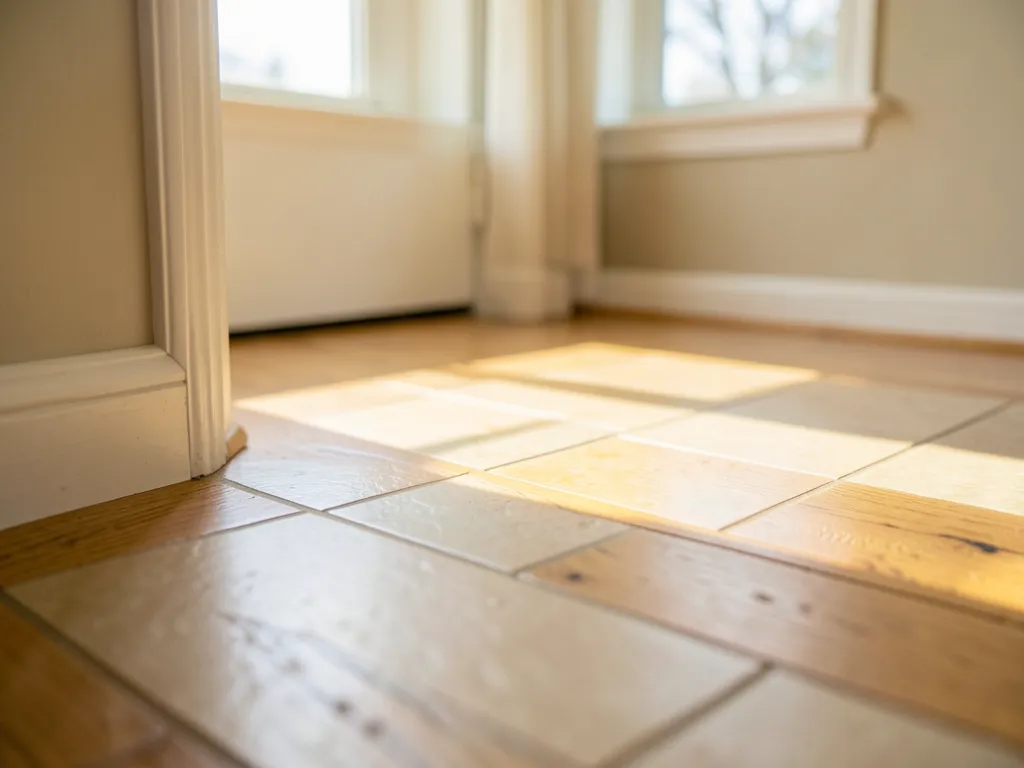
Tile-to-hardwood is the classic Oklahoma City transition, especially in open-concept homes where a tiled kitchen flows into a wood-floored living area. The challenge is twofold: hardwood needs room to expand, and the tile edge needs support. We typically use a Schluter profile or a stone saddle depending on height difference and design intent. If you're planning both surfaces, coordinate the installs — our hardwood flooring and tile crews work from the same height plan so the finished floors land flush.
Tile to Carpet
Carpet transitions are forgiving on height but unforgiving on edges. A bare tile edge under stretched carpet will eventually chip. A proper reducer or a tack strip set back from the tile edge prevents both chipping and carpet fraying. Bedrooms and hallways in Edmond and Moore homes are the usual locations.
Tile to Concrete or Garage Slab
Going from an interior tile floor to a garage or patio slab usually involves a height drop. A sloped threshold or a step-down detail with a bullnose edge handles it safely. This is where exterior-grade materials matter — see our exterior tile page for freeze-rated options.
Tile to Luxury Vinyl Plank or Laminate
Increasingly common in rental properties and budget renovations, these transitions need a flush T-molding that doesn't create a rocking point. Vinyl plank is thinner than most tile, so plan the underlayment build-up before the first bag of thinset is mixed.
Transition Options That Hold Up in Oklahoma Weather
Not all trims are created equal. Here's how we evaluate them for local conditions.
- Schluter profiles (Schiene, Reno, Trep): Anodized aluminum or stainless profiles protect the tile edge and create a clean visual line. Excellent for tile-to-hardwood and tile-to-carpet, and they handle minor slab movement gracefully.
- Stone saddles and thresholds: Marble, granite, or quartz saddles add a furniture-grade look between rooms. Best where height differences are significant or where two tile fields meet at a doorway.
- Reducers and T-moldings: Practical for carpet and vinyl, but choose solid wood or high-grade composite — the big-box MDF versions swell and delaminate in Oklahoma humidity.
- Movement joints and flexible sealant: At large tile fields, at the perimeter, and where tile meets a fixed object, a flexible joint backer with sealant outperforms rigid grout every single time.
Oklahoma City Foundation and Climate Factors Nobody Warns You About
This is where local expertise separates a lasting install from a callback. Three forces dominate.
Expansive Clay Soil and Slab Movement
Much of the metro sits on highly plastic clay that swells in spring and shrinks in summer drought. Slabs move. Tiles don't. That's why we never butt tile tight to walls, cabinets, or other flooring — we leave a expansion gap and cover it with trim or sealant. Skipping that step is the number one reason floors crack along doorways in South Oklahoma City and Midwest City.
Freeze/Thaw Cycles in Winter
Repeated freezing and thawing stresses exterior thresholds, garage entries, and sunroom transitions. Any transition exposed to the elements needs frost-rated thinset, proper drainage slope, and a joint that can flex. We've repaired countless patio edges where a builder used interior-grade adhesive.
Seasonal Humidity Swings
Oklahoma's summer humidity and winter dryness make hardwood and engineered wood move noticeably. A transition installed in August without allowance for that movement will show gaps by February. We plan the gap based on material width and expected seasonal range, not guesswork.
Layout and Height Planning Before the First Tile Goes Down
Great transitions are designed at the estimate, not at the end of the job. Before installation begins, we measure finished floor heights for every material involved, account for underlayment, mortar bed, and tile thickness, then decide where each transition lands. In remodels of older homes around the Plaza District and Paseo Arts District, that often means adjusting a subfloor or adding a plywood build-up so a new tile kitchen doesn't sit a half inch below the original oak.
Layout matters too. Nobody wants a sliver cut of tile running along a transition line, so we shift the layout origin to ensure full or half tiles meet the doorway. Explore our floor tile installation service page to see how we plan field layout and edge details together.
Where Transitions Matter Most in an Oklahoma City Home
- Bathroom doorways: The most common spot for water intrusion and cracked tile. A threshold with a slight dam keeps shower splash off wood and carpet.
- Kitchen-to-living-room lines: High visibility, high traffic — this is where craftsmanship shows.
- Laundry and mud rooms: Tile-to-vinyl or tile-to-concrete transitions that must survive moisture and heavy movement.
- Covered patios near Lake Hefner and neighborhood greenbelts: Exterior thresholds that take wind-driven rain and freeze cycles.
- Sunrooms and additions: Where new slab meets old slab, movement is guaranteed. A proper joint is mandatory.
Shower entries deserve special mention. A poorly detailed curb-to-bathroom-floor transition can wick moisture into framing for years before you notice. Our shower tile installation work always includes a fully waterproofed, properly sloped entry detail — because the transition is where waterproofing either succeeds or fails.
Mistakes We Fix on Oklahoma City Transition Jobs
When we're called in for repairs, the same errors show up again and again:
- Grout used where flexible sealant was required, leading to cracked joints within one season.
- Tile butted directly against hardwood with no expansion gap, causing tenting or chipping.
- Unsupported tile edges over a hollow gap, which chip under normal foot traffic.
- Interior thinset used outdoors, failing after the first hard freeze.
- Transitions installed without checking slab flatness, leaving a rocking trim piece.
The fix is usually straightforward once the cause is understood — but it's always cheaper to plan the detail at the start than to rebuild it later.
Choose a Tile Installer Who Cares About the Edges
Anyone can set tile in the middle of a room. The mark of real craftsmanship is what happens at the perimeter — the doorways, the corners, the places where one material hands off to another. Echo Tile and Stone is owner-operated by Randy Valadez, and every project gets that level of personal attention, from a single doorway repair in Tuttle to a whole-home floor renovation in Norman. We combine premium materials with meticulous technique, and we back it with on-call availability for urgent repairs, including weekends.
Our philosophy is simple: transform your floors, redefine your space. Transitions are a big part of that — because a floor only feels seamless when every edge is handled with intention. If you're planning a tile project or dealing with a transition that's already failing, let's talk. Reach out through our contact page or call (405) 905-5982 to schedule a consultation. Combine services like a shower remodel with new floor tile, and we'll build in savings on the project as a whole.
Oklahoma City homes face soil movement, humidity swings, and hard freezes that punish shortcuts. Build your next tile project on details that are engineered for the climate — starting at the edges.


